
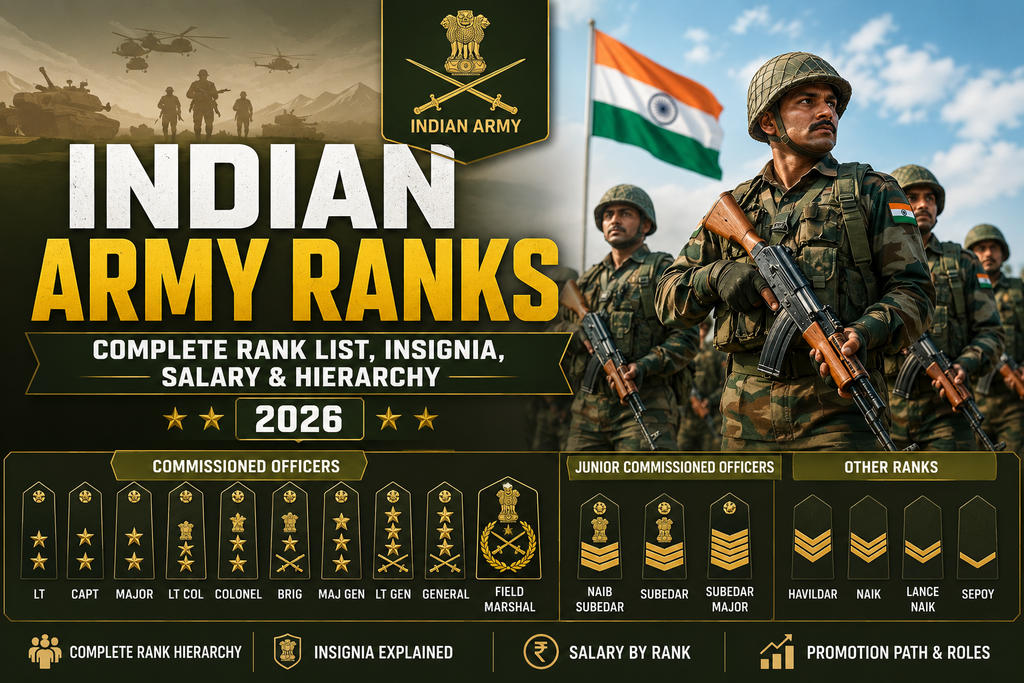
Indian Army Ranks – Complete Guide to Officer, JCO & Soldier Rank Structure
The Indian Army is the world’s second-largest standing army and one of the most respected armed forces globally. It protects India’s borders, safeguards national sovereignty, assists during natural disasters, and participates in United Nations peacekeeping missions. To maintain discipline, leadership, and operational efficiency, the Army follows a well-defined rank structure.
Understanding Indian Army Ranks is essential for defence aspirants, serving personnel, veterans, students preparing for NDA, CDS, AFCAT, CAPF, SSC, and civilians interested in learning about the Indian Armed Forces.
The Indian Army rank hierarchy is divided into three categories:
- Commissioned Officers
- Junior Commissioned Officers (JCOs)
- Other Ranks (ORs)
Each rank carries specific responsibilities, authority, leadership roles, insignia, and pay levels. Promotion is based on experience, performance, professional courses, vacancies, and service requirements.
In this comprehensive guide, you’ll learn about the complete Indian Army Rank List, rank insignia, salary levels, promotion hierarchy, responsibilities, and frequently asked questions.
Quick Overview
| Particular | Details |
|---|---|
| Organization | Indian Army |
| Headquarters | New Delhi |
| Controlled By | Ministry of Defence |
| Supreme Commander | President of India |
| Chief of the Army Staff | Four-Star General |
| Rank Categories | Officers, JCOs & Other Ranks |
| Highest Rank | Field Marshal |
| Lowest Rank | Sepoy |
What are Indian Army Ranks?
An Indian Army rank represents a soldier’s position, authority, leadership responsibilities, and level of command within the military organization.
Ranks determine:
- Chain of Command
- Leadership Responsibilities
- Operational Authority
- Pay & Allowances
- Promotion Opportunities
- Appointment Eligibility
Every soldier, from a newly recruited Sepoy to the Chief of the Army Staff, serves within this structured hierarchy.
Categories of Indian Army Ranks
The Indian Army has three broad categories of ranks.
1. Commissioned Officers
Commissioned Officers are responsible for planning operations, leading troops, making tactical decisions, and commanding units.
Officer ranks include:
- Lieutenant
- Captain
- Major
- Lieutenant Colonel
- Colonel
- Brigadier
- Major General
- Lieutenant General
- General
- Field Marshal
2. Junior Commissioned Officers (JCOs)
JCOs serve as the bridge between officers and soldiers.
Ranks include:
- Naib Subedar
- Subedar
- Subedar Major
They are highly experienced leaders who supervise troops and maintain discipline.
3. Other Ranks (OR)
Other Ranks include soldiers and Non-Commissioned Officers (NCOs).
Ranks include:
- Sepoy
- Lance Naik
- Naik
- Havildar
These personnel form the backbone of every Army unit.
Complete Indian Army Rank List
| Rank | Category |
|---|---|
| Field Marshal | Commissioned Officer |
| General | Commissioned Officer |
| Lieutenant General | Commissioned Officer |
| Major General | Commissioned Officer |
| Brigadier | Commissioned Officer |
| Colonel | Commissioned Officer |
| Lieutenant Colonel | Commissioned Officer |
| Major | Commissioned Officer |
| Captain | Commissioned Officer |
| Lieutenant | Commissioned Officer |
| Subedar Major | JCO |
| Subedar | JCO |
| Naib Subedar | JCO |
| Havildar | Other Rank |
| Naik | Other Rank |
| Lance Naik | Other Rank |
| Sepoy | Other Rank |
Commissioned Officer Ranks
Field Marshal
Field Marshal is the highest rank in the Indian Army and is a ceremonial five-star rank awarded for exceptional service. It is a lifetime appointment and has been conferred only twice in Indian history.
Responsibilities
- Lifetime honorary appointment
- National military leadership
- Strategic advisory role
- Ceremonial representation
General
A General is a four-star officer and the highest active rank in the Indian Army. The Chief of the Army Staff (COAS) holds this rank and commands the entire Indian Army.
Responsibilities
- Commands the Indian Army
- Military planning and strategy
- National defence coordination
- Operational oversight
Lieutenant General
A Lieutenant General is a three-star officer who commands Army Commands, Corps, or holds senior staff appointments at Army Headquarters.
Responsibilities
- Command Army Commands
- Lead Corps formations
- Strategic operational planning
- Training and policy formulation
Major General
A Major General is a two-star officer who typically commands a Division.
Responsibilities
- Divisional command
- Operational planning
- Administration
- Training and readiness
Brigadier
A Brigadier is a one-star officer and usually commands a Brigade.
Responsibilities
- Brigade command
- Tactical operations
- Personnel management
- Operational coordination
Colonel
A Colonel generally commands a Battalion or Regiment and is responsible for operational readiness, training, administration, and welfare of troops.
Lieutenant Colonel
A Lieutenant Colonel often serves as the Second-in-Command of a Battalion or commands independent units, depending on the appointment.
Major
Majors supervise company-level operations, training, administration, and planning while assisting senior commanders.
Captain
Captains usually command companies or platoons and are responsible for troop leadership, discipline, and operational execution.
Lieutenant
Lieutenant is the first commissioned rank in the Indian Army. Newly commissioned officers from the National Defence Academy (NDA), Indian Military Academy (IMA), Officers Training Academy (OTA), and Technical Entry Schemes generally begin their careers at this rank.
Responsibilities
- Lead platoons
- Conduct training
- Maintain discipline
- Execute operational tasks
Junior Commissioned Officer (JCO) Ranks
Junior Commissioned Officers (JCOs) hold a unique and prestigious position in the Indian Army. They serve as the vital link between Commissioned Officers and Other Ranks (OR), ensuring effective communication, leadership, discipline, and administration within units. JCOs are promoted from the ranks based on their experience, performance, leadership qualities, and professional competence.
Subedar Major
The Subedar Major is the highest Junior Commissioned Officer (JCO) rank in the Indian Army. A Subedar Major acts as the senior-most advisor to the Commanding Officer on matters related to discipline, welfare, morale, and administration of soldiers.
Responsibilities
- Senior-most JCO in the Battalion
- Advises the Commanding Officer
- Supervises all JCOs and Other Ranks
- Maintains discipline and military traditions
- Looks after troop welfare and morale
Typical Experience
Approximately 28–34 years of service
Pay Level
Level 8 under the 7th Central Pay Commission (plus Military Service Pay and applicable allowances).
Subedar
The Subedar is the second-highest JCO rank and is responsible for commanding platoons, supervising training, and assisting officers in operational and administrative duties.
Responsibilities
- Platoon Commander
- Supervises training
- Administrative responsibilities
- Mentors junior soldiers
- Assists officers during operations
Typical Experience
Approximately 22–28 years of service
Pay Level
Level 7 under the 7th CPC.
Naib Subedar
Naib Subedar is the first Junior Commissioned Officer rank and marks the transition from Non-Commissioned Officer to Commissioned leadership responsibilities.
Responsibilities
- Leads platoon-level activities
- Supervises Havildars and Naiks
- Conducts military training
- Maintains discipline
- Administrative support
Typical Experience
Approximately 16–22 years of service
Pay Level
Level 6 under the 7th CPC.
Other Ranks (OR)
Other Ranks (OR) form the backbone of the Indian Army. They execute operations, protect national borders, and carry out the day-to-day responsibilities essential to the Army’s functioning.
Havildar
A Havildar is a Non-Commissioned Officer (NCO) responsible for commanding sections, training soldiers, and ensuring operational readiness.
Responsibilities
- Section Commander
- Training supervision
- Weapon maintenance
- Operational deployment
- Discipline management
Typical Experience
10–18 years
Naik
The Naik supervises small teams of soldiers and assists Havildars in training and operational duties.
Responsibilities
- Team leadership
- Training assistance
- Field operations
- Administrative duties
Lance Naik
A Lance Naik is the first level of leadership among soldiers and is entrusted with supervising a small group during training and operations.
Responsibilities
- Team supervision
- Assists senior NCOs
- Maintains discipline
- Supports operational tasks
Sepoy
A Sepoy is the entry-level rank in the Indian Army. Every soldier joins the Army as a Sepoy before progressing through the promotion hierarchy.
Responsibilities
- Border security
- Combat operations
- Disaster relief
- Counter-insurgency operations
- Peacekeeping missions
- Military training
Indian Army Rank Hierarchy
The promotion hierarchy in the Indian Army is structured to reward experience, leadership, and professional development.
| Promotion Order | Rank |
|---|---|
| 1 | Sepoy |
| 2 | Lance Naik |
| 3 | Naik |
| 4 | Havildar |
| 5 | Naib Subedar |
| 6 | Subedar |
| 7 | Subedar Major |
| 8 | Lieutenant |
| 9 | Captain |
| 10 | Major |
| 11 | Lieutenant Colonel |
| 12 | Colonel |
| 13 | Brigadier |
| 14 | Major General |
| 15 | Lieutenant General |
| 16 | General |
| 17 | Field Marshal |
Indian Army Rank Insignia
Each rank in the Indian Army is identified by a unique insignia worn on the shoulder or collar.
| Rank | Insignia Description |
|---|---|
| Field Marshal | National Emblem with crossed baton & sabre in a wreath |
| General | National Emblem with crossed baton & sabre |
| Lieutenant General | National Emblem above crossed baton & sabre |
| Major General | Crossed baton & sabre with one star |
| Brigadier | National Emblem with three stars in a triangle |
| Colonel | National Emblem with two stars |
| Lieutenant Colonel | National Emblem with one star |
| Major | National Emblem |
| Captain | Three stars |
| Lieutenant | Two stars |
| Subedar Major | National Emblem with gold stripe |
| Subedar | Two stars with stripe |
| Naib Subedar | One star with stripe |
| Havildar | Three chevrons |
| Naik | Two chevrons |
| Lance Naik | One chevron |
| Sepoy | No insignia |
Indian Army Salary by Rank (Approximate)
| Rank | Pay Level |
|---|---|
| Lieutenant | Level 10 |
| Captain | Level 10B |
| Major | Level 11 |
| Lieutenant Colonel | Level 12A |
| Colonel | Level 13 |
| Brigadier | Level 13A |
| Major General | Level 14 |
| Lieutenant General | Level 15 |
| General | Level 18 |
| JCOs | Levels 6–8 |
| Other Ranks | Levels 3–5 |
Note: In addition to basic pay, personnel receive Military Service Pay (MSP), Dearness Allowance (DA), Transport Allowance, High Altitude Allowance, Siachen Allowance, Field Area Allowance, Risk & Hardship Allowance, House Rent Allowance (where applicable), and other benefits based on their posting and service conditions.
Promotion Process in the Indian Army
Promotion in the Indian Army is based on several factors, including:
- Length of service
- Annual Confidential Reports (ACRs/APARs)
- Professional military courses
- Medical fitness
- Vacancies
- Performance and leadership qualities
- Promotion boards
Officers commissioned through NDA, IMA, OTA, TES, and other entry schemes follow structured promotion policies laid down by the Army.
Difference Between Officer, JCO & Other Rank
| Feature | Officer | JCO | Other Rank |
|---|---|---|---|
| Commission | Presidential Commission | JCO Commission | No Commission |
| Leadership | Commands Units & Formations | Supervises Troops | Executes Operations |
| Entry | NDA, CDS, OTA, TES | Promotion | Direct Recruitment |
| Responsibilities | Strategic & Operational Leadership | Administration & Troop Management | Field Operations & Combat |
Why Understanding Indian Army Ranks is Important
Knowledge of Indian Army ranks helps:
- Defence aspirants preparing for NDA, CDS, AFCAT, and CAPF exams.
- Candidates appearing for Army recruitment rallies.
- Families of serving Defence personnel understand the Army hierarchy.
- Civilians appreciate the responsibilities and leadership structure of the Armed Forces.
- Students preparing for competitive examinations and interviews.
The rank system ensures discipline, accountability, operational efficiency, and clear command authority across one of the world’s largest and most professional armed forces.
Frequently Asked Questions (FAQs)
1. What are the ranks in the Indian Army?
The Indian Army rank structure is divided into three categories:
- Commissioned Officers
- Junior Commissioned Officers (JCOs)
- Other Ranks (OR)
2. What is the highest rank in the Indian Army?
The Field Marshal is the highest rank in the Indian Army. It is a ceremonial five-star rank awarded only in exceptional circumstances.
3. Who is the highest serving officer in the Indian Army?
The Chief of the Army Staff (COAS) is the highest serving officer and holds the rank of General (Four-Star General).
4. What is the lowest rank in the Indian Army?
The lowest rank in the Indian Army is Sepoy, which is the entry-level rank for soldiers.
5. How many officer ranks are there in the Indian Army?
There are 10 Commissioned Officer ranks:
- Lieutenant
- Captain
- Major
- Lieutenant Colonel
- Colonel
- Brigadier
- Major General
- Lieutenant General
- General
- Field Marshal
6. What are JCO ranks in the Indian Army?
Junior Commissioned Officer (JCO) ranks are:
- Naib Subedar
- Subedar
- Subedar Major
7. What are Other Ranks (OR) in the Indian Army?
Other Ranks include:
- Sepoy
- Lance Naik
- Naik
- Havildar
8. What is the salary of a Lieutenant in the Indian Army?
A Lieutenant is placed at Pay Level 10 under the 7th Central Pay Commission and also receives Military Service Pay (MSP), Dearness Allowance (DA), and other allowances.
9. What is the salary of a Colonel?
A Colonel is placed in Pay Level 13 along with applicable military allowances.
10. Which rank commands a Battalion?
A Colonel generally commands an Infantry Battalion or Regiment.
11. Which rank commands a Brigade?
A Brigadier commands a Brigade.
12. Which rank commands a Division?
A Major General commands a Division.
13. Which rank commands a Corps?
A Lieutenant General commands an Army Corps.
14. Which rank commands the Indian Army?
The Chief of the Army Staff (COAS) commands the Indian Army and holds the rank of General.
15. Can a Sepoy become an Officer?
Yes. Through departmental entry schemes such as the Army Cadet College (ACC) and other internal selection processes, eligible soldiers can become Commissioned Officers.
16. How are promotions given in the Indian Army?
Promotions are based on:
- Length of Service
- Performance
- Medical Fitness
- Professional Courses
- Vacancies
- Promotion Boards
17. What is the difference between JCO and Officer?
Commissioned Officers receive a Presidential Commission and command units, whereas JCOs are promoted from the ranks and act as the link between officers and soldiers.
18. What is the difference between Major and Colonel?
A Major usually commands a Company, while a Colonel commands a Battalion or Regiment and holds greater administrative and operational responsibilities.
19. What does the National Emblem on Army insignia represent?
The Ashoka Lion Capital (National Emblem) signifies authority, leadership, and the commission granted by the President of India.
20. Why are Indian Army ranks important?
The rank structure establishes a clear chain of command, ensures discipline, defines responsibilities, and enables efficient leadership across the Indian Army.
Conclusion
The Indian Army rank structure is the foundation of leadership, discipline, and operational effectiveness within one of the world’s most respected armed forces. From a Sepoy who begins his military journey to the prestigious rank of Field Marshal, every position carries unique responsibilities, authority, and opportunities for growth.
Understanding the hierarchy of Commissioned Officers, Junior Commissioned Officers (JCOs), and Other Ranks (OR) is essential not only for Defence aspirants preparing for NDA, CDS, AFCAT, and other competitive examinations but also for serving personnel, veterans, and anyone interested in the functioning of the Indian Army.
Each promotion reflects experience, dedication, leadership, and professional excellence. The structured rank system ensures that every soldier knows their responsibilities, maintains discipline, and contributes effectively to national security.
Whether you are preparing for a Defence career or simply wish to understand the Indian Army better, knowing the Indian Army Ranks provides valuable insight into the leadership and organization of the nation’s land forces.
To Read More Blogs:-
https://faujifinancebazaar.com/rr-hospital-delhi/
https://faujifinancebazaar.com/command-hospital-lucknow/
https://faujifinancebazaar.com/command-hospital-eastern-command/
https://faujifinancebazaar.com/army-headquarters-csd-canteen/
https://faujifinancebazaar.com/csd-smart-card/
https://faujifinancebazaar.com/children-education-allowance/
https://faujifinancebazaar.com/royal-enfield-csd-price/
To Learn More:-
https://indianarmy.nic.in/
https://mod.gov.in/
https://joinindianarmy.nic.in/
https://www.sainikschooladmission.in/